

Automatic Cans Filling Line

banner

Automatic Cans Filling Line

The Automatic Can Filling Line is suitable for packaging beer, soft drinks, sparkling water, juice, tea, and other beverages in aluminum or metal cans. It provides a fully automated, hygienic, and efficient canning solution for small to medium beverage production lines.

Aluminum can beverage filling line

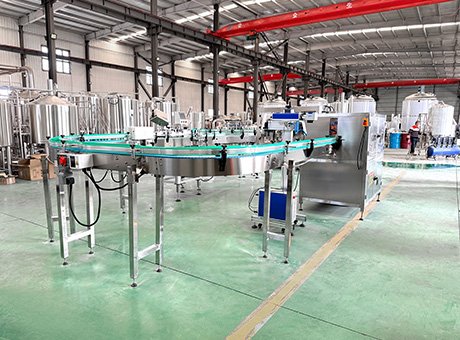
The Automatic Can Filling Line is designed for efficient beverage canning. Suitable for aluminum cans, it fills beer, carbonated beverages, sparkling water, soft drinks, juice, tea, and other liquid products. The system integrates can feeding, rinsing, filling, and seaming for a smooth production process.


Using advanced filling technology and an automated PLC control system, the line delivers accurate filling, reliable seam quality, and stable operation while minimizing product loss. Its food-grade stainless steel construction ensures hygienic production and easy maintenance.


Supporting various can sizes and production capacities, the Automatic Can Filling Line offers flexible configurations for different production needs. It is an ideal solution for breweries and beverage manufacturers seeking reliable, efficient, and cost-effective can packaging.


Automatic Cans Filling Line

Efficient Filling

Accurate filling ensures stable production and reduces product loss. Suitable for carbonated and non-carbonated beverages.

Hygienic Design

Food-grade stainless steel ensures clean and safe production. Durable construction provides reliable long-term operation.

Flexible Configuration

Supports different can sizes and production capacities. Optional features can be customized to meet project needs.

Quality Guaranteed

Each machine is tested before delivery for reliable performance. A 1-year warranty and technical support are included.

Automatic Cans Filling Line Configuration

Washing Machine

Washing Machine

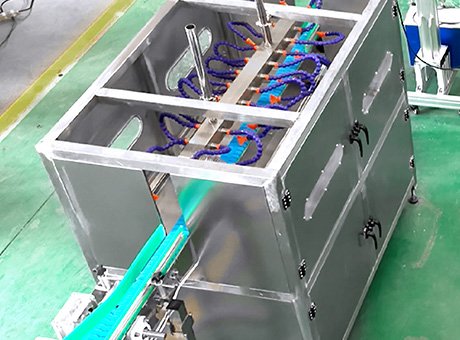
Automatically rinses empty cans to remove dust and impurities, ensuring clean containers before filling and meeting hygienic production standards.
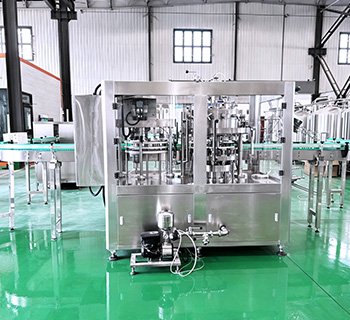
Filling and Seaming Machine

Filling and Seaming Machine

Integrates precise filling and can seaming in one system, providing stable operation, accurate fill levels, and reliable sealing for aluminum cans.
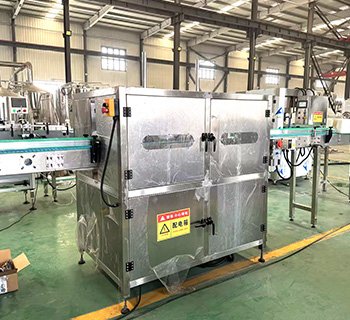
Drying Machine

Drying Machine

Uses high-pressure air to remove residual moisture from can surfaces after washing, preparing cans for coding and labeling.
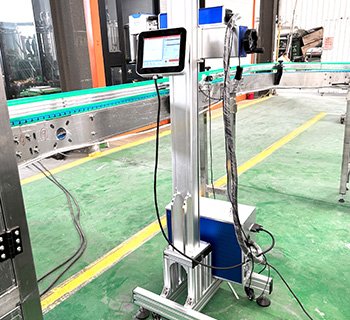
Laser Coding Machine

Laser Coding Machine

Prints production dates, batch numbers, and traceability codes with high precision, delivering permanent, clear, and maintenance-free marking.
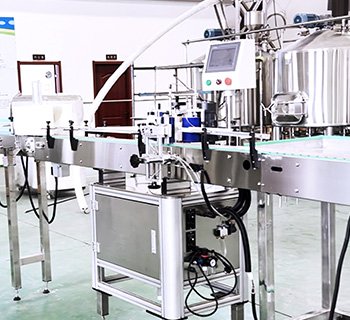
Labeling Machine

Labeling Machine

Applies self-adhesive labels accurately and consistently, supporting various can sizes while improving packaging appearance and efficiency.
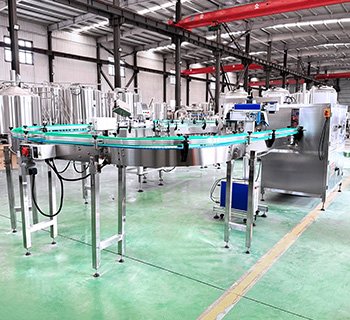
Can Conveyor System

Can Conveyor System

Automatically transfers cans between each processing stage, ensuring smooth, continuous production while reducing manual handling and improving line efficiency.

Automatic Cans Filling Line Parameter Table

EquipmentKey Specificaions/Description
Can Rinsing and Can Loading PlatformCapacity:1000-5000 cans/hour
Power:0.55kW(water pump)
Automatic Can Filling and Sealing MachineCapacity:1000-5000 cans/hour (330ml/500 ml)
Filling Pressure:0.3-0.5 MPa
CO₂Content: 8g/m³
CO₂ Pressure:0.5-0.6 MPa
Can Dryer MachineCapacity:1000-5000 cans/hour
Applicable Can Height:50-350 mm(customizable)
Labeling Machine with Code PrinterLabeling Speed:80 pcs/min(depending on product andlabel size)
Applicable Diameter:25-120mm
Conveyor Belt
Material:SUS304 stainless steel
Width:720 mm
Length:10m(customizable according to layout)
Conveying MotorsMaterial:SUS304 stainless steel
Brand:ABB(CE certified)
Power:1.5kW
Collection TableMaterial:Sanitary stainless steel
Function:Convenient for manual product collection and packing


Production Process of Automatic Cans Filling Line

Can Conveyor System

Design & Planning

Designed according to can type, production capacity, and factory layout to provide an efficient and customized filling solution.

Can Conveyor System

Precision Manufacturing

Manufactured with food-grade stainless steel and precision machining for excellent durability, hygiene, and reliable performance.

Can Conveyor System

Assembly & Integration

Mechanical components, filling systems, pipelines, and electrical controls are carefully assembled and calibrated for smooth operation.

Can Conveyor System

Performance Testing

Each machine is tested for filling accuracy, pressure stability, leak prevention, and overall operating performance before delivery.

Can Conveyor System

Packing

After final inspection, the machine is securely protected and packed to ensure safe transportation and reliable delivery.

Automatic Cans Filling Line Details

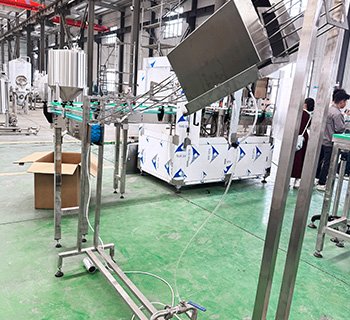
Automatic can rinsing and loading machine
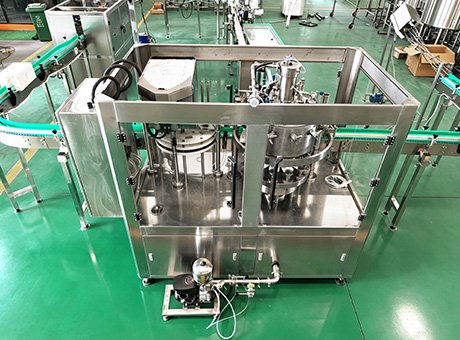
Can filling and seaming machine
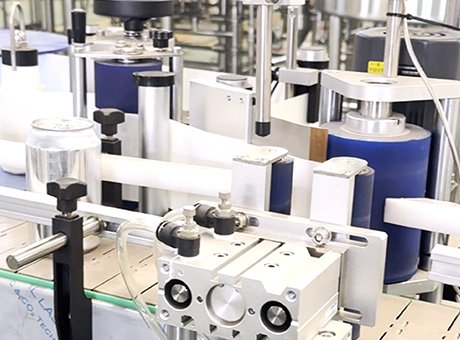
Self-adhesive can labeling machine
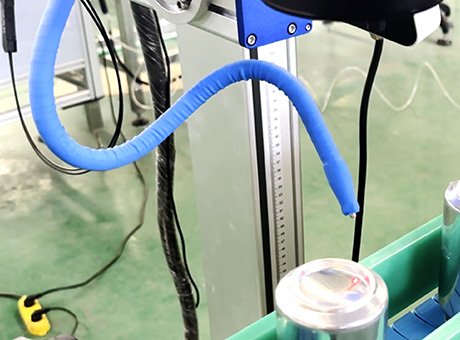
Laser coding machine for beverage cans
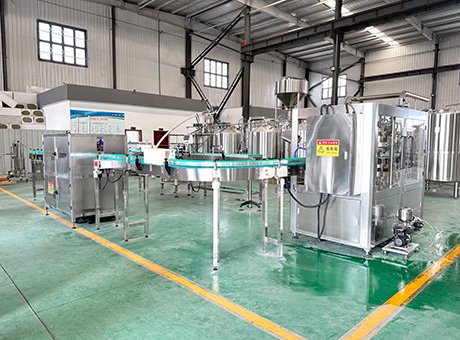
Integrated can filling and seaming line
Automatic can conveyor system

Automatic Cans Filling Line FAQ

1.What is a double seam, and how do I know it is good?

A double seam is the two-stage fold that joins the can end to the can body, forming the only barrier between your product and the outside air. It is judged externally by non-destructive visual and dimensional checks, and internally by tearing down the seam and measuring the overlap between cover hook and body hook — overlap is the critical dimension. On a line the routine matters as much as the measurement: dimensions should be recorded per seamer head on a schedule, so a trend is visible before leakers appear.

2.Why do seam defects sometimes appear every 4th, 6th or 8th can?

Multi-head seamers rotate and seam one can per head in sequence. If one head develops a mechanical problem (roll wear, chuck wear, timing drift or lubrication failure), only the cans seamed by that head are affected, so defects repeat at a fixed interval equal to the head count: every 4th, 6th or 8th can. Fixed-frequency sampling can therefore miss a consistently defective head entirely, because an interval that aligns with the head count may keep checking the good heads. Track seam dimensions per seamer head, not per shift.

3.How often should we inspect can seams?

Seam inspection should be a scheduled routine, not something triggered only by leakers. Industry practice is to tear down and measure the internal dimensions of the seam for each seamer head at a set interval during production, and to record the results so trends are visible. Because defects from one head appear periodically rather than continuously, the interval must be short enough that every head is sampled within a production run. A practical routine on this line is to tear down and measure every seamer head at the start of the run, then at least once every 30 minutes of production — every 15–30 minutes on uninterrupted high-speed runs — and again after any jam, adjustment or can/end change.

4.What dissolved oxygen pickup can be expected on a canning line?

In practice this line holds the pickup to roughly 20–30 ppb at the filler, with the CO₂ pre-purge and a stable 0.3–0.5 MPa fill keeping it there. Oxygen pickup on a canning line comes mainly from the air left in the can before filling, plus turbulence at the filler, so the control is a CO₂ pre-purge plus stable isobaric filling and low foaming. Measurement should be taken at the filler head under normal production conditions; industry benchmarks put a good canning operation below 30 ppb DO pickup.

5.Which can sizes can the line run?

The line runs 330 ml and 500 ml cans as standard, with can heights from 50 mm to 350 mm (customizable) and the common 202 / 204 and 211 body diameters covered by the seamer change parts. Can sizes are handled by changeable format parts and seamer change parts, and a format change on a line touches several stations at once — infeed and conveyor guides, the filler, the seamer and the labeller. That is why a changeover is planned as one sequence rather than machine by machine. Send us your can formats and we will confirm the change part set.

6.Does the line have no-can-no-fill protection?

Yes. The filling valve has a "no vacuum if no can" function, so the filler does not release product when a can is missing from the position — this avoids product loss and keeps the machine clean during gaps in the can flow. It matters most on high-speed lines, where a single missing can is a normal occurrence rather than a fault.

7.Is the line suitable for both carbonated and non-carbonated drinks?

Yes, and on a line this is a valve-set and pressure-design decision rather than a change of machine. Carbonated products are filled isobarically with a CO₂ pre-purge to hold carbonation and suppress foaming, while still products are filled without counter-pressure. Both then run through the same conveyor, seamer, dryer and labeller. Give us the full product mix and the split between them and we will specify one valve set that covers the range.

8.What happens after seaming — drying, coding and labelling?

Filled and seamed cans pass a drying machine to remove surface water, then a laser coding machine applies date and batch codes, and a labelling machine applies the label — all carried on the can conveyor system. The drying step matters because residual water interferes with both coding and label adhesion.

Contact us for the latest quote

DESIMY, better equipment for a better you.

Let us know your production scale and needed equipment—we will reply with stock availability and a quote within 12 hours.

+86 18615260186

+86 18615260186

sales@desimy.com

+