


Automatic Keg Filling Line

banner

Automatic Keg Filling Line

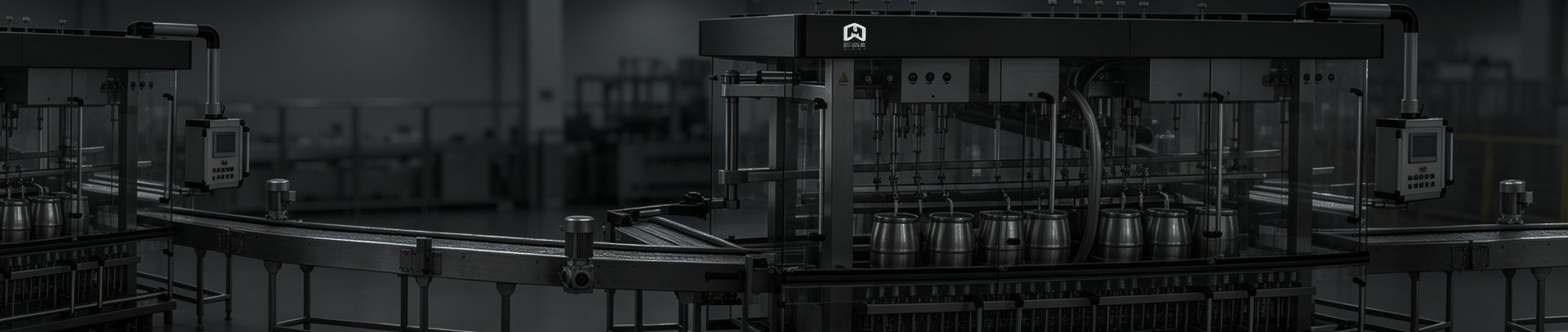
This automatic keg filling line is designed for washing, filling, and packaging beer, cider, kombucha, carbonated beverages, and other liquid products into stainless steel kegs. It is widely used in breweries and beverage production facilities, delivering hygienic operation, reliable filling accuracy, and high efficiency for small to large-scale keg production.

Automatic Keg Filling Line

The automatic keg filling line provides a complete solution for keg cleaning, filling, and sealing. It integrates washing, sterilization, filling, CO₂ pressurization, and capping into one system, ensuring hygienic production, efficient operation, and consistent filling performance.


Featuring a PLC control system and precision filling technology, the line delivers accurate filling, reliable sealing, and minimal product loss. Built with food-grade stainless steel, it offers stable operation, easy maintenance, and supports various keg sizes.


Suitable for beer, craft beer, lager, cider, kombucha, sparkling beverages, and other keg-packaged liquid products, it is an ideal choice for breweries and beverage manufacturers seeking efficient and reliable keg packaging.


Automatic Keg Filling Line

Automated Keg Handling

Automates the entire keg filling process from washing to sealing, ensuring efficient production and consistent performance.

Accurate Filling Control

Delivers precise filling volumes with reliable CO₂ pressurization, reducing product loss and maintaining beverage freshness.

Wide Keg Compatibility

Supports various keg sizes and specifications with quick adjustments, providing flexibility for different production requirements.

Reliable & Efficient Operation

Designed for stable, continuous production with easy maintenance, helping reduce downtime and improve overall efficiency.

Automatic Keg Filling Line Configuration

Transport System

Transport System

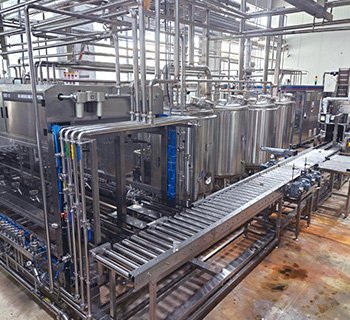
Automatically conveys empty and filled kegs throughout the production line, ensuring smooth transfer, stable operation, and improved production efficiency.
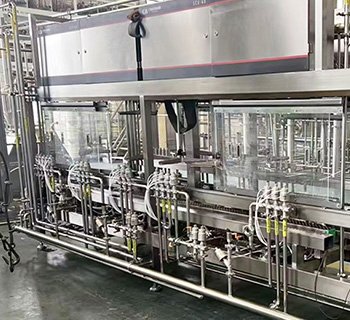
Washing and Filling Machine

Washing and Filling Machine

Integrates keg washing, sterilizing, filling, and sealing into one system, ensuring hygienic processing, accurate filling, and reliable performance.
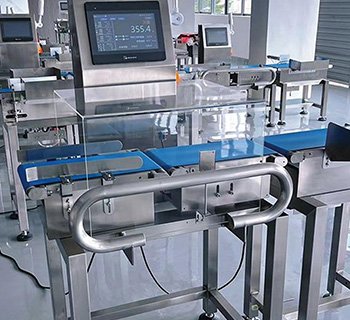
Weighing System

Weighing System

Monitors the filling weight of each keg in real time to ensure accurate volume, consistent quality, and reduced product waste.
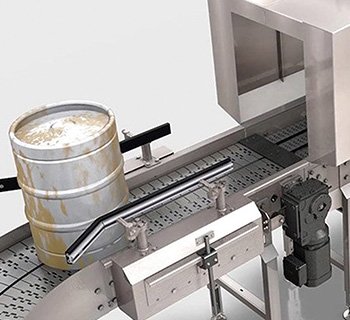
Reject System

Reject System

Automatically detects and removes underfilled, overfilled, or defective kegs, maintaining product quality and production efficiency.
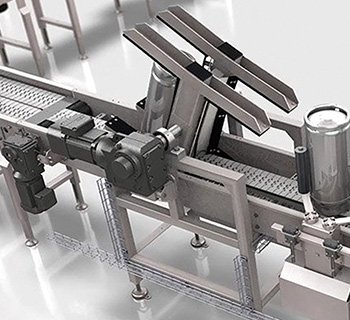
Turnover System

Turnover System

Automatically inverts kegs before and after processing to facilitate internal cleaning, draining, and smooth handling throughout the filling process.
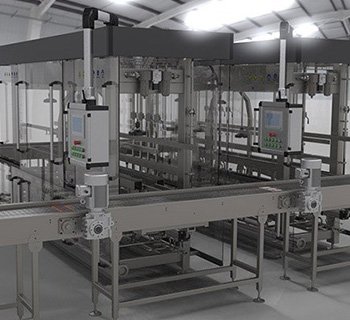
Control System

Control System

Equipped with a PLC and touchscreen interface for automatic operation, real-time monitoring, and easy parameter adjustment, ensuring stable and efficient production.

Automatic Keg Filling Line Parameter Table

ParameterSpecification
Product NameAutomatic Keg Filling Line
Production Capacity30-300 Kegs/H (Customizable)
Applicable Keg Size5L-50L Stainless Steel Kegs
Applicable ProductsBeer,Cider,Kombucha,Carbonated Beverages
Filling MethodIsobaric(Counter Pressure)Filling
Cleaning Stations1-4 Heads(Optional)
Filling Heads1-4 Heads (Optional)
Filling Accuracy±0.2%
Air Pressure0.6-0.8 MPa
CO₂Pressure0.15-0.30 MPa
Washing MediaWater,Hot Water,Caustic,Sanitizer
Control SystemPLC+Touch Screen
Machine MaterialSUS304/SUS316L(Optional)
Power Supply220V/380V,50Hz/60Hz(Customizable)


Production Process of Automatic Keg Filling Line

Control System

Design & Planning

Designed according to keg type, production capacity, and factory layout to provide an efficient and customized filling solution.

Control System

Precision Manufacturing

Manufactured with food-grade stainless steel and precision machining for excellent durability, hygiene, and reliable performance.

Control System

Assembly & Integration

Mechanical components, filling systems, pipelines, and electrical controls are carefully assembled and calibrated for smooth operation.

Control System

Performance Testing

Each machine is tested for filling accuracy, pressure stability, leak prevention, and overall operating performance before delivery.

Control System

Packing

After final inspection, the machine is securely protected and packed to ensure safe transportation and reliable delivery.

Automatic Keg Filling Line Details

Automatic Keg Filling Line FAQ

1.How does CO₂ purging and counter-pressure filling keep oxygen pickup low?

On a line, oxygen pickup is controlled at each station rather than at one point: washing finishes with a sterile rinse, the keg is then purged with CO₂ to displace residual air and condensate, and filling takes place under counter-pressure so the product is never exposed to air or agitated into foam. Because the keg is already at counter-pressure, filling runs without breakout. The weighing and reject system then confirms each keg was filled to specification. Because the keg stays closed from the CO₂ purge through to sealing, the pickup stays in the low tens of ppb — well below what an open-container bottle or can filler can hold.

2.What are the steps of keg washing and sterilisation before filling?

The sequence is pre-rinse with recovered water, hot caustic wash, intermediate rinse, hot-water or steam sterilisation, sterile-water rinse, and finally the CO₂ purge and counter-pressure. On this line the steps are integrated into one continuous flow: the washing and filling machine carries the keg through cleaning, sterilisation and filling without it being disconnected and staged in between. Removing the staging interval is the point — a keg that sits after washing has time to pick up contamination and condensate, which is exactly what the sterilising rinse and CO₂ purge are there to prevent.

3.What does the weighing system do, and how does the reject system work?

Filled kegs are weighed to verify fill accuracy, and the reject system automatically removes any keg that falls outside the tolerance. Short-fills and over-fills are therefore caught and diverted rather than reaching the customer, and the line produces a continuous record of filling performance by keg. It is the main quality control point on the line.

4.Which keg sizes and spear types does the line support?

The line covers 5 L to 50 L stainless steel kegs, including 5 L and 10 L party kegs and the DIN and Euro (Sankey) formats at 20 L, 30 L and 50 L, with the spear adaptor — A, D, G or S type — changed at the washing and filling heads. A single line covers more than one keg type, because the change parts are distributed across the stations — the transport system, the washing and filling heads, and the weighing station all have to match the keg. That is why format coverage is planned at line level and confirmed against your actual keg mix rather than assumed from the filler specification alone.

5.How many kegs per hour can the line handle?

Capacity spans 30–300 kegs per hour, set by the number of washing and filling heads (1–4 of each) and by keg size, and the figure already includes washing because the wash sits inside the same pass. Throughput depends on keg size and on whether washing and filling are integrated into one continuous flow. Because the line automates handling from washing through sealing, the effective output is higher than separate stand-alone machines would give, since transfer and staging time is removed from the cycle.

6.Which beverages is the line suitable for?

Beer, craft beer, lager, cider, kombucha, sparkling beverages and other keg-packaged liquid products. Kombucha and cider need the same low-oxygen discipline as beer, because dissolved oxygen affects flavour stability and shelf life. Carbonation level and fill volume are set per product.

7.How are empty and filled kegs moved and turned on the line?

A transport system conveys empty and filled kegs through the line, and a turnover system handles keg orientation, so the whole sequence from washing through sealing runs automatically with minimal manual handling. A PLC-based control system coordinates the stations. Reducing manual handling is also an oxygen and hygiene benefit — every manual transfer is an opportunity for air ingress or contamination.

8.What is the minimum oxygen pickup achievable?

The achievable minimum is around 10 ppb, and a typical production run sits at 10–20 ppb. The main levers are the completeness of the CO₂ purge before filling, the counter-pressure level, and product temperature. Purging with CO₂ and filling under counter-pressure is what keeps pickup low. Because the keg is a closed, reusable package, pickup is measured in the filled keg under normal production conditions rather than from a laboratory sample.

Contact us for the latest quote

DESIMY, better equipment for a better you.

Let us know your production scale and needed equipment—we will reply with stock availability and a quote within 12 hours.

+86 18615260186

+86 18615260186

sales@desimy.com

+