


Automatic Glass Bottle Filling Line

banner

Automatic Glass Bottle Filling Line

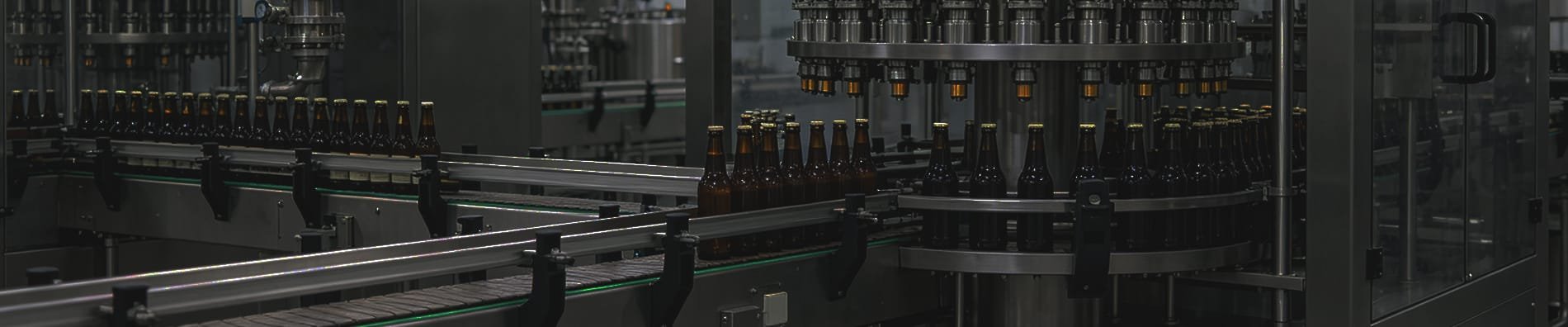
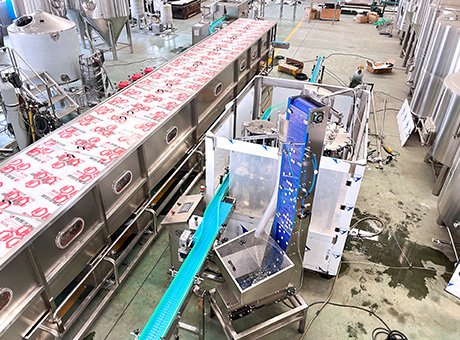
This automatic glass bottle filling line is designed for filling and packaging a wide range of liquid products, including beer, carbonated beverages, juice, and other carbonated drinks in glass bottles.It is widely used in breweries and beverage factories, offering stable performance and high efficiency for small to large-scale production.

glass bottle filling line

This glass bottle filling line is a fully automated solution for hygienic and efficient filling of beer, carbonated drinks, and other beverages into glass bottles. It integrates bottle rinsing, filling, and capping in one compact system, improving production efficiency while reducing labor costs.


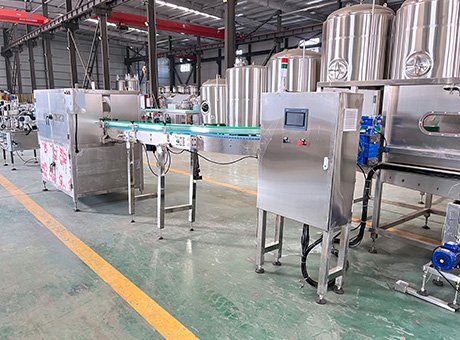
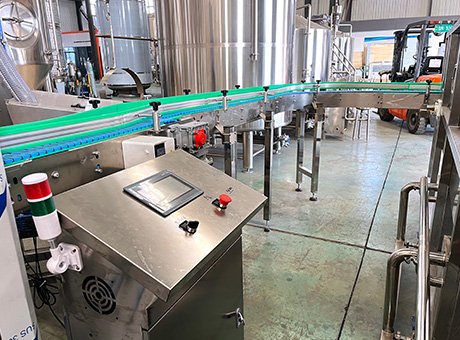
Equipped with a high-precision filling system, it ensures accurate liquid levels and minimizes product loss, especially for carbonated beverages. The PLC touch screen control system allows easy operation and real-time monitoring. With stable performance and compatibility with various bottle sizes, it is an ideal choice for breweries and beverage manufacturers seeking efficiency and reliability.


Suitable for craft beer, lager, sparkling water, soda drinks, kombucha, cider, juice beverages, and other liquid products.


Automatic Glass Bottle Filling Line

High-Precision Filling

Ensures accurate and consistent filling volume with minimal deviation, improving product quality and reducing material waste.

Fully Automatic Line

Integrated rinsing, filling, capping, and conveying for continuous automatic operation, reducing labor and increasing efficiency.

Flexible Bottle Adaptation

Quick adjustment for different bottle sizes and shapes, suitable for glass and PET bottles with easy changeover.

Stable & Low Maintenance

Reliable design ensures long-term stable running with simple maintenance, reducing downtime and operating cost.

Automatic Glass Bottle Filling Line Configuration

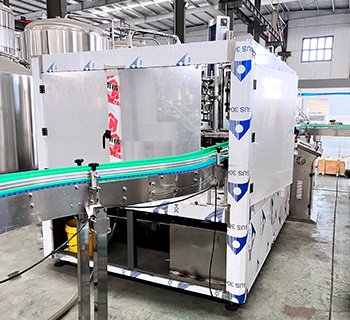
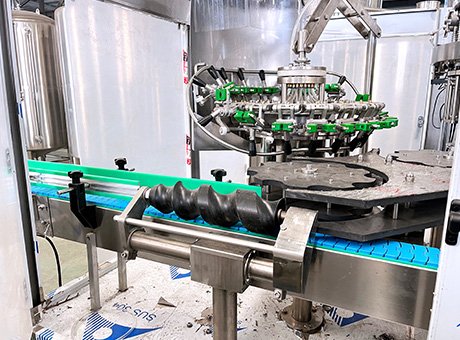
Glass bottle beer filling and capping machine

Glass bottle beer filling and capping machine

An integrated system that rinses, fills and caps glass beer bottles in one line, ensuring hygiene, high efficiency and stable filling accuracy.
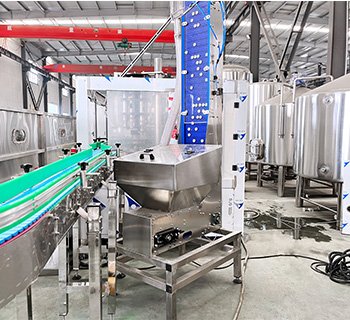
Cap elevator

Cap elevator

Automatically lifts and feeds caps to the capping machine, ensuring continuous supply, reducing manual work and improving production efficiency.
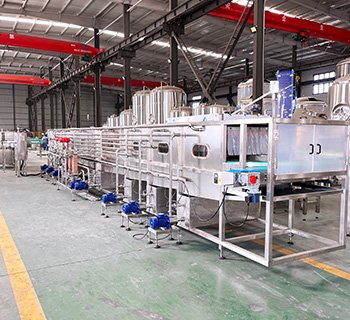
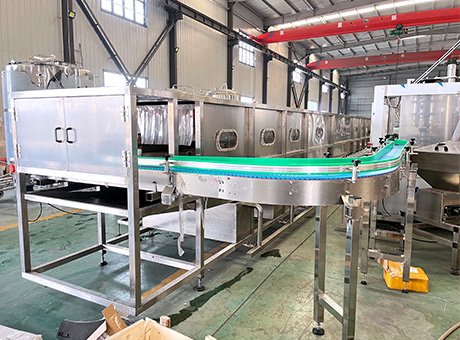
Spray Sterilization Tunnel

Spray Sterilization Tunnel

Uses high-pressure spray and sterilizing solution to clean and disinfect bottles, ensuring hygiene before filling and reducing contamination risk.
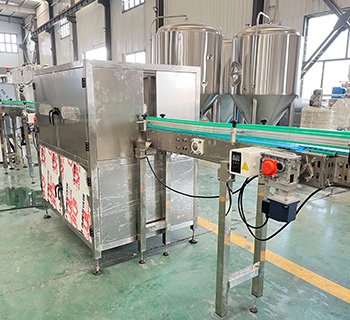
Automatic blow-drying machine

Automatic blow-drying machine

Removes residual water from bottles using high-pressure air, ensuring dry, clean bottles before filling and improving product quality and adhesion.
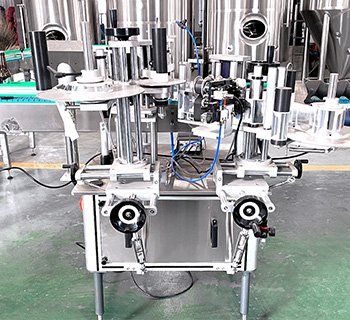
Double label head self-adhesive labeling machine

Double label head self-adhesive labeling machine

Applies front and back labels simultaneously with high precision, suitable for round bottles, improving labeling speed and appearance consistency.
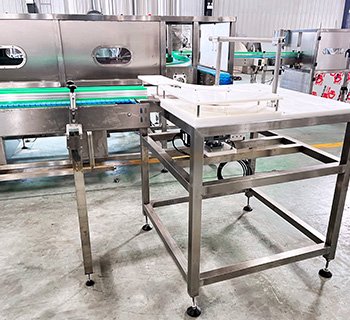
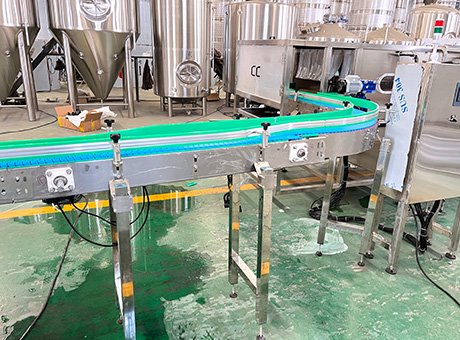
Rotary empty bottle platform

Rotary empty bottle platform

Rotating table used for empty bottle accumulation and smooth transfer into the production line, ensuring stable and continuous bottle feeding.

Automatic Glass Bottle Filling Line Parameter Table

ParameterKey Specifications/Description
Single Machine Efficiency≥95%
Filling Temperature0-4℃
Max CO2 Content3-4g/L
Filling Pressure(CO2)0.15-0.4MPa
Filling MethodShort-tube isobaric Flling
Conveyor Height1150-1300 mm
Level ControlMechanical valve with vent pipe
Oxygen RemovalVacuum&COz displacement
Compressed Air Consumption0.45m³/h  (0.8 MPa)
Sterile Air Consumption1.2m³/h(0.4MPa)
Vacuum Consumption180g/hl(0.6 MPa)
Vacuum PumpStainless steel pump head


Production Process of Automatic Glass Bottle Filling Line

Rotary empty bottle platform

Design & Planning

Designed according to bottle type, production capacity, and factory layout to provide an efficient and customized filling solution.

Rotary empty bottle platform

Precision Manufacturing

Manufactured with food-grade stainless steel and precision machining for excellent durability, hygiene, and reliable performance.

Rotary empty bottle platform

Assembly & Integration

Mechanical components, filling systems, pipelines, and electrical controls are carefully assembled and calibrated for smooth operation.

Rotary empty bottle platform

Performance Testing

Each machine is tested for filling accuracy, pressure stability, leak prevention, and overall operating performance before delivery.

Rotary empty bottle platform

Packing

After final inspection, the machine is securely protected and packed to ensure safe transportation and reliable delivery.

Automatic Glass Bottle Filling Line Details

Spray sterilization tunnel for glass bottles
Automatic blow-drying machine for glass bottles
Glass bottle beer filling and capping machine
Double label head self-adhesive labeling machine
glass bottle beverage production line
Rotary empty bottle platform for filling line

Automatic Glass Bottle Filling Line FAQ

1.What is counter-pressure (isobaric) filling and why does it matter for glass bottles?

Counter-pressure (isobaric) filling equalises the pressure inside the bottle with the pressure in the filling tank before the product flows, using CO₂. Because the pressure difference is removed, the CO₂ already dissolved in the product stays in solution instead of escaping as foam. Without it, filling carbonated beer or kombucha at atmospheric pressure causes foaming, carbonation loss and inconsistent fill heights.

2.What CO₂ pressure, filling temperature and CO₂ content does the line run at?

The line fills short-tube isobaric at a CO₂ pressure of 0.15–0.4 MPa, with a filling temperature of 0–4 °C and CO₂ content up to 3–4 g/L. Filling cold is essential for carbonated products: it keeps CO₂ in solution and reduces foaming at the filler. These three parameters together determine whether carbonation survives the fill.

3.What dissolved oxygen pickup can I expect, and how is it kept low?

Oxygen is removed by vacuum and CO₂ displacement before filling, and the whole operation runs at 0–4 °C, which limits the oxygen that can be picked up. Short-tube isobaric filling plus a mechanical level-control valve with a vent pipe keeps the fill controlled without agitation. In practice this configuration keeps pickup at the filler in the 20–40 ppb range, which holds total packaged oxygen in bottled beer below 50 ppb. Industry practice is to measure at the filler head under normal production conditions.

4.Can this line fill kombucha and other non-beer beverages?

Yes. The line is used for craft beer, lager, sparkling water, soda drinks, kombucha, cider and juice beverages in glass bottles. Kombucha and other live or delicate products benefit most from the low-oxygen design, because dissolved oxygen affects flavour stability and shelf life. Carbonation level and filling temperature are set per product.

5.What glass bottle sizes and fill volumes can the line handle?

The standard format window is 250–1,000 ml, covering bottles 50–90 mm in diameter and 150–330 mm tall. The line is built around changeable format parts, and a rotary empty-bottle platform stabilises infeed so bottles enter the filler aligned. Send your bottle drawing and target output and we will confirm the configuration.

6.What is the changeover time when switching bottle formats?

As a planning figure, a bottle format change on this line takes 30–60 minutes with two operators, and 1–2 hours when the neck finish and cap format change as well. Changeover involves changing format parts on the infeed, filler, capper and labeller, then resetting guides. It is a design decision rather than a fixed figure — tell us your SKU mix and changeover frequency and we will optimise the line for it.

7.How often should we run CIP, and is the line CIP-ready?

The line is designed for CIP cleaning with automatic cleaning of the product path, which reduces manual labour and helps hold hygiene standards between runs. Cleaning frequency is usually set by product changes and by your hygiene plan rather than by the machine alone — a product or format change normally triggers a clean, while continuous runs of the same product clean on a time-based schedule. A typical cycle runs 60–90 minutes — pre-rinse, 1–2.5% caustic at 70–80 °C circulated for 30–60 minutes, intermediate rinse, then a final rinse or sanitiser — with one clean every 24 hours of running as the usual baseline.

8.What floor space and utility connections should we prepare?

As a planning figure for a line of this class — around 2,000–6,000 BPH — allow roughly 25–35 m of line length with a 5–6 m working aisle, plus space for empty-bottle pallets at the infeed and packed product at the discharge. For this line we typically ask for 0.45 m³/h compressed air at 0.8 MPa, 1.2 m³/h sterile air at 0.4 MPa and vacuum at 180 g/hl (0.6 MPa), with a conveyor height of 1150–1300 mm. Installed power is typically 25–40 kW, with steam at 200–400 kg/h and 0.4–0.6 MPa where a spray sterilisation tunnel is included, and 2–4 m³ of process water per CIP cycle. We issue a full utility schedule so your facility team can prepare connections in advance.

Contact us for the latest quote

DESIMY, better equipment for a better you.

Let us know your production scale and needed equipment—we will reply with stock availability and a quote within 12 hours.

+86 18615260186

+86 18615260186

sales@desimy.com

+