
 English
 简体中文
 Français
 Español
 العربية
 Bahasa Indonesia
 한국어
 Русский
 Português
 Deutsch
 Polski
 日本語
 हिंदी
 Türkçe
 Tiếng Việt
 Italiano
 ไทย

A bottle filling machine cost typically ranges from USD 1,500 for a manual unit to USD 16,000 for a 10-head semi-automatic machine, depending on filling head count, bottle format, filling method and which functions you include. Head count sets the baseline; the configuration around it decides the rest of the quote.
Most buyers start the same way: they decide how many bottles per hour they need, then ask for a price per filling head. That works when comparing two similar machines. It fails when two suppliers quote the same output and land USD 5,000–10,000 apart, because head count is only the visible part of the specification.
One scope note: this article is about the machine, not the whole line. DESIMY builds both, but the specification decisions that drive cost are settled at machine level.
How Many Filling Heads Do You Need?
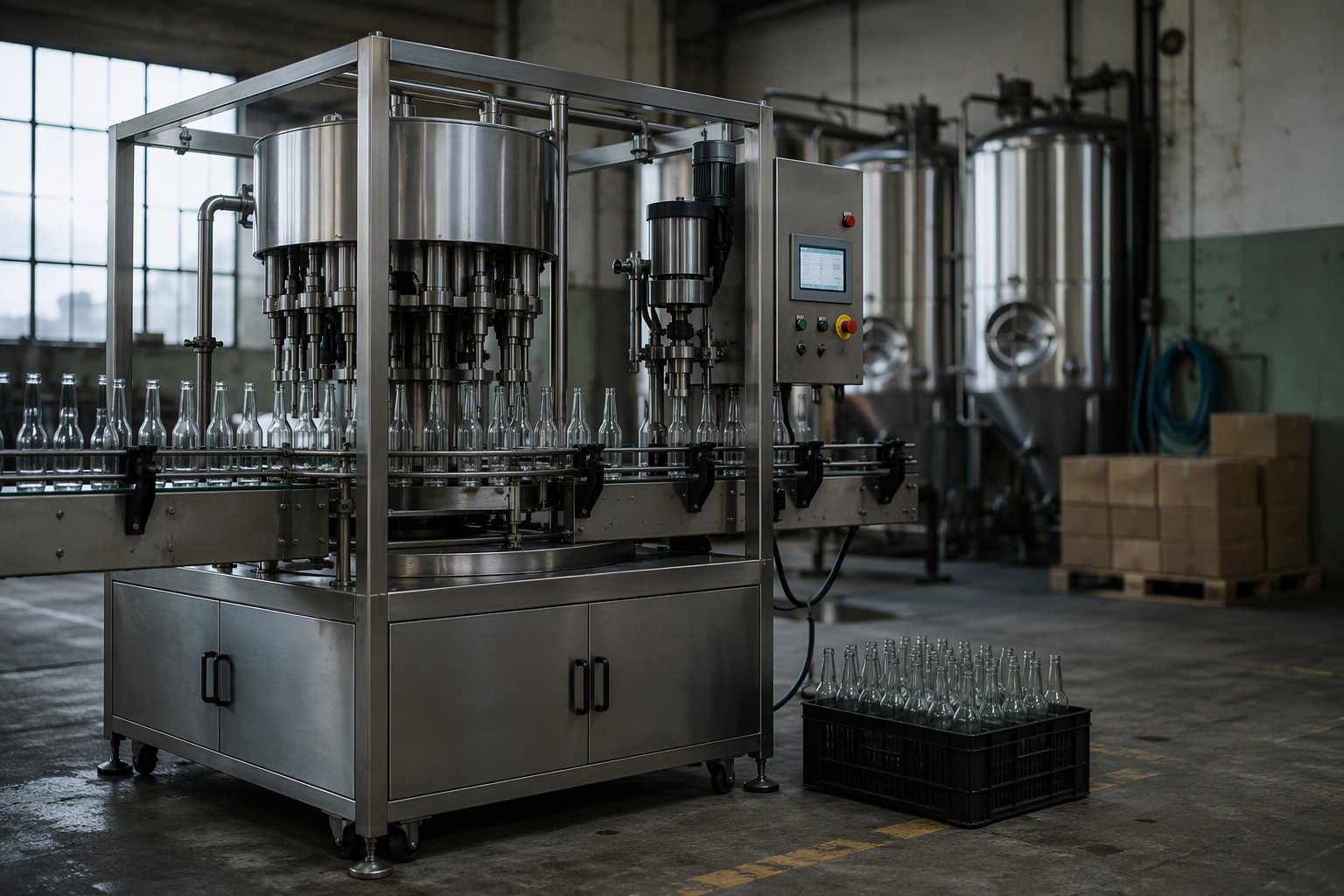
DESIMY builds a manual unit and four semi-automatic bottle filling and capping machines — 4, 6, 8 and 10 heads — covering roughly 100 to 500 bottles per hour. Capacity rises by about 50 BPH per filling head: 4 heads at up to 200 BPH, 6 at 300, 8 at 400 and 10 at 500, on 330 ml and 500 ml glass bottles.
Head count is the most visible cost variable in any bottle filling machine cost quote, which is why it dominates the conversation — and the easiest one to over-buy. A 10-head machine standing idle four days a week costs more per bottle than a 6-head machine running daily, because the fixed cost — frame, cabinet, guarding, installation — is spread over fewer operating hours.
Work backwards from your real peak week, not your best day.
| Model | Filling heads | Capacity | Container range | Filling method | Wetted material | Power | Dimensions (L × W × H) | Price (USD, market range) |
|---|---|---|---|---|---|---|---|---|
| Manual bottle filling and capping machine | 1, operator-controlled | 100 BPH (1.7 BPM) | 330 / 500 ml glass | Gravity or counter-pressure | SUS304 | 220 V / 380 V, 50/60 Hz | 1,000 × 700 × 1,600 mm | USD 1,500–3,000 |
| 4-head bottle filling and capping machine | 4 | 200 BPH (3.3 BPM) | 330 / 500 ml glass | Gravity or counter-pressure | SUS304 | 1.5 kW · 380 V, 50/60 Hz | 1,800 × 1,000 × 1,850 mm | USD 3,000–6,000 |
| 6-head bottle filling and capping machine | 6 | 300 BPH (5 BPM) | 330 / 500 ml glass | Gravity or counter-pressure | SUS304 | 2.2 kW · 380 V, 50/60 Hz | 2,100 × 1,100 × 1,900 mm | USD 5,000–9,000 |
| 8-head bottle filling and capping machine | 8 | 400 BPH (6.7 BPM) | 330 / 500 ml glass | Gravity or counter-pressure | SUS304 | 3.0 kW · 380 V, 50/60 Hz | 2,400 × 1,200 × 1,950 mm | USD 7,000–12,000 |
| 10-head bottle filling and capping machine | 10 | 500 BPH (8.3 BPM) | 330 / 500 ml glass | Gravity or counter-pressure | SUS304 | 4.0 kW · 380 V, 50/60 Hz | 2,700 × 1,300 × 2,000 mm | USD 10,000–16,000 |
| Bottle rinser filling and capping machine (monoblock) | 4 / 6 / 8 / 10 | 200–500 bottles/h | 330 / 500 ml glass | Isobaric filling only | SUS304 | 5.5 kW · customized to local standards | 3,200 × 1,600 × 2,100 mm | USD 18,000–35,000 |
Capacity is rated on 330 ml and 500 ml glass bottles; larger fill volumes reduce the hourly rate. Container range is 250–1,000 ml, bottle diameters 50–90 mm, heights 150–330 mm, set by changeable format parts. Counter-pressure models also need 0.4–0.6 MPa air and a CO₂ supply. Prices are indicative market ranges, not a quotation — the final figure depends on configuration.
One upgrade fact to price in now: the 4, 6, 8 and 10-head machines share their filling principle and much of their hardware, so stepping up later is a filling head assembly and drive change, not a new machine.
What Drives the Price Beyond Head Count?
Seven factors move a bottle filling machine cost more than head count does: bottle format, filling valve technology, automation level, integration scope, wetted material, peripheral equipment and customization depth. In most quotes, two or three of these account for the gap — not the number of filling heads.
Bottle format decides which machine you are buying, because bottles, cans and kegs need different handling and valves. Valve technology decides whether the machine can hold carbonation. Automation level decides how many operators stand beside it. Integration scope decides how many machines you buy at once. Wetted material decides the service life of the product-contact parts. Peripheral equipment and customization decide how much of your process the supplier must engineer rather than ship off the shelf.
| Configuration | Best for | What it costs you |
|---|---|---|
| Manual filler with hand capping | Pilot batches and seasonal one-offs | Lowest price, highest labour per bottle, capped at 100 BPH |
| Semi-automatic 4–10 head filler and capper | Startups, small craft breweries, scheduled weekly bottling | Higher price, 200–500 BPH, one operator supervising |
| Bottle rinser filling and capping machine | Bottles that must be rinsed, or are re-used | Higher price, removes a manual step and the re-contamination risk |
| Complete line: rinser, filler, capper, conveyor | Producers whose filler is no longer the bottleneck | Highest price, longest installation, needs a trained maintenance team |
The rule of thumb: stay with a stand-alone machine while the filler itself is the bottleneck. Move to a line when the steps around it become the constraint — when rinsing, capping and labelling are separate manual operations, or when the filler sits idle waiting for bottles. An automatic line runs 500–10,000 BPH.
Does Container Format Change the Price of a Bottle Filling Machine?
Yes — bottles, cans and kegs are filled by different machines, not different settings on one machine. A bottle filling machine and a can filling machine differ in grippers, valve geometry, conveyor pitch and capping technology, so one cannot be priced from the other's per-head rate.
Within bottles, glass and PET are not interchangeable either. Glass bottles are rigid and can be handled mechanically, so a glass machine uses a mechanical infeed and a standard rinser-filler-capper. PET bottles are lighter and deform under pressure, so a PET machine uses an air conveyor for infeed, and both filling pressure and bottle support are set to avoid distortion. Filling temperature and carbonation limits also differ.
If you package more than one container type, you have two options: a bottle and can filling and capping machine that runs both with quick format switching, or a second machine. The combined unit costs more than a single-format machine and less than two.
Does Counter-Pressure Filling Cost More Than Gravity Filling?
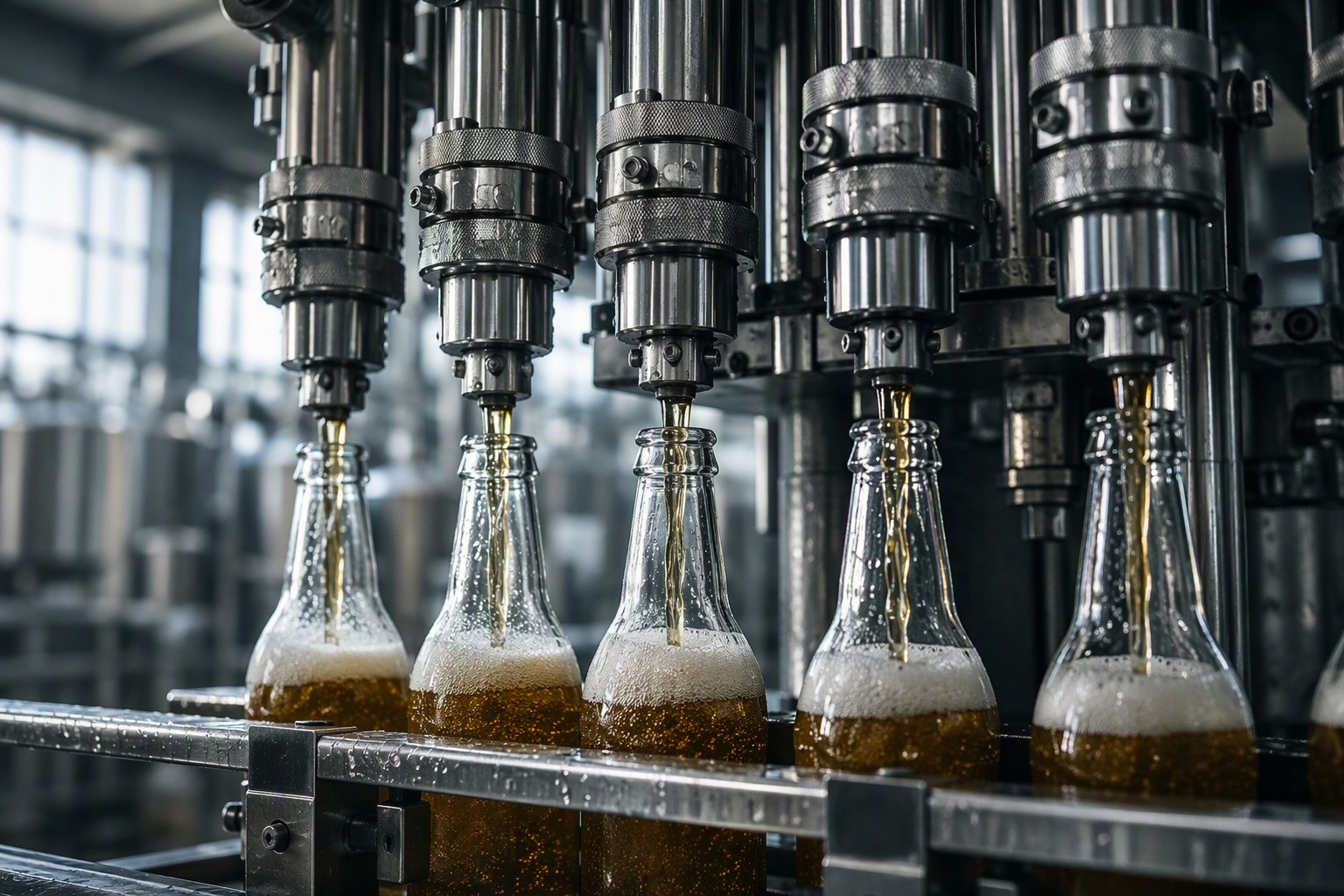
Yes. Counter-pressure filling adds to the cost of any bottle filling machine, and for carbonated products it is not optional. Carbonated products must be filled under counter-pressure (isobaric) conditions, because filling at atmospheric pressure drives CO₂ out of solution and causes foaming, carbonation loss and unstable fill heights.
Our machines use short-tube filling under counter-pressure with low-oxygen operation, and a mechanical level-control valve with a vent pipe holds fill heights consistent. Beer, kombucha and carbonated soft drinks all run on the same principle.
Still products — juice, wine, tea and still water — can use gravity filling, which needs simpler valves and a cheaper machine. On the 4 to 10-head machines, filling method is an option on the same body; the monoblock is isobaric only. Quote counter-pressure for a still product you never carbonate and you pay for capability you will not use; quote gravity-only for beer and the machine will not hold carbonation.
Is an Integrated Rinser-Filler-Capper Worth the Extra Price?
If you rinse bottles before filling, usually yes. A bottle rinser filling and capping machine performs rinsing, filling and capping in one continuous machine instead of three separate stations. That removes the transfer steps between stations, cutting manual handling and the risk of re-contamination after rinsing. It also takes less floor space and needs fewer operators than three stand-alone units.
Against that, running requirements are higher. Published filling accuracy is ±1%, but the machine needs a water supply and drainage because rinsing is internal, so plan the area as a wet zone with a washable floor. One operator is still sufficient.
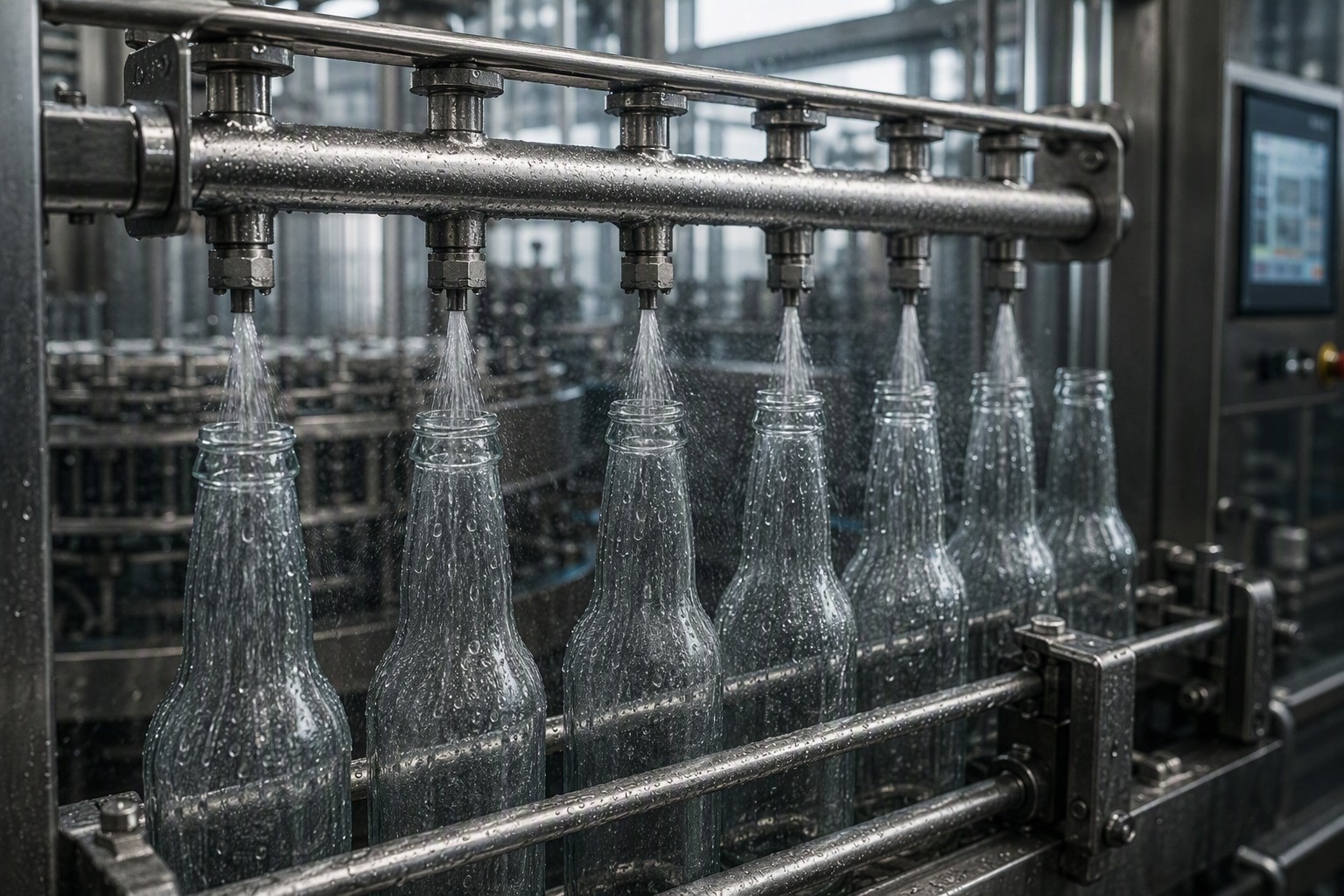
Whether you need the rinser comes down to the bottles you buy. A built-in rinser removes dust and residue from empty bottles immediately before filling; a separate bottle washer is a different, larger machine used when bottles need heavier cleaning or are re-used. Filling new bottles only, the benefit is modest; handling returned bottles, it is the reason to choose this machine over a plain filler.
What Costs Continue After You Buy the Machine?
Utilities, format parts and spares are the costs a bottle filling machine cost quote does not show. Every model needs a standard power supply and compressed air; counter-pressure models need 0.4–0.6 MPa air and a CO₂ supply; the monoblock also needs water supply and drainage. The 10-head machine draws the most air and power in the range — confirm your supply holds at full speed.
A bottle filling machine is built around one container format, so a new bottle size means a new format parts set, quoted separately. Ask for the first changeover set price in writing, and which spares should sit on your shelf.
Downtime is usually the largest of these costs: a valve seal that takes three weeks to arrive costs more than one that costs three times as much and arrives in three days.
DESIMY ships each machine tested, with a one-year warranty and spare-parts support, and on-site installation is available worldwide.
How Do You Compare Two Bottle Filling Machine Cost Quotes?
Normalise both bottle filling machine cost quotes into the same eight-row worksheet before you compare the totals. Two suppliers can quote the identical head count and still be selling different machines — the difference sits in the details, not in the headline price.
| Cost driver | How it moves the cost of a bottle filling machine | What to decide |
|---|---|---|
| Filling head count | 4, 6, 8 or 10 heads, about 50 BPH per head | Your peak week, not your best day |
| Filling valve set | Gravity valves cost less than counter-pressure valves | Does your product contain CO₂? If so, mandatory |
| Bottle format | Each bottle size needs its own change parts | How many bottle sizes in the next three years? |
| Functions included | Rinsing, capping and labelling each add scope | Count the operators and steps each one removes |
| Wetted material | SUS304 is standard; higher grades cost more | Is the product acidic, salty or high in chloride? |
| Utilities | Air, CO₂, and water plus drainage for a monoblock | Does your supply hold at full speed? |
| Change parts | Quoted separately from the machine | Ask for the first changeover set price in writing |
| After-sales scope | Installation, training and warranty length | Can your team commission the machine unaided? |
Conclusion: Ask for a Costed Quote, Not a Price List
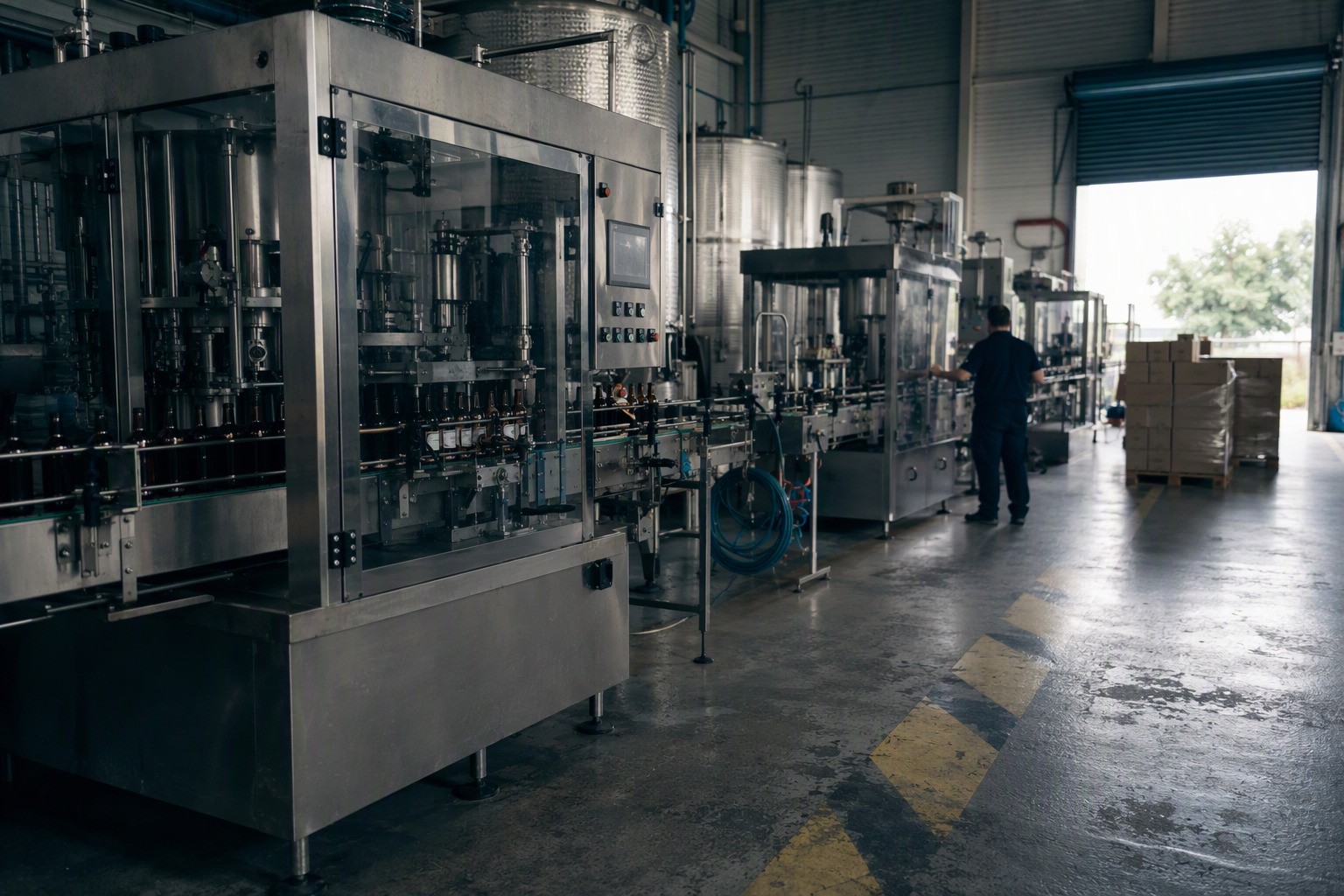
Head count tells you the size of a bottle filling machine. Valve type, bottle format, integration scope and material tell you the price. Buyers who compare quotes on head count alone usually end up paying for capability they do not use, or discovering at commissioning that the machine cannot hold carbonation.
Start from the product, then the bottle, then the throughput. If you are comparing bottle filling machine quotations and the numbers do not line up, send us your product, bottle format and daily volume — where the budget fits a smaller machine, we will say so.
DESIMY builds filling equipment in a 5,000 m² production facility, established in 2012, with 300+ installation cases across craft breweries, kombucha producers and beverage factories. Our range covers manual and automatic bottle, can and keg filling, plus the craft brewery filling lines that connect them into a complete packaging hall.
Next step: contact DESIMY with your product type, bottle format and target bottles per hour. We will send a costed configuration rather than a generic price list.
Frequently Asked Questions About Bottle Filling Machine Cost
How much does a 6-head bottle filling machine cost?
Price is driven by head count, bottle format, filling method and which functions you include (rinsing, capping, labelling), so we quote by configuration rather than a list price. A 6-head bottle filling and capping machine sits between the 4-head semi-automatic entry point and a 10-head unit; as a market guide, budget roughly USD 5,000–9,000.
Why do two suppliers quote very different prices for the same BPH?
Because the same basic machine can be specified very differently, and BPH alone does not fix the specification. Two suppliers quoting the same head count can differ on the valve set (counter-pressure versus gravity), the bottle format parts, and how much of the line is integrated rather than left stand-alone.
Do I need counter-pressure filling for beer?
Yes. Carbonated products must be filled under counter-pressure (isobaric) conditions, because filling at atmospheric pressure drives CO₂ out of solution and causes foaming, carbonation loss and unstable fill heights. Our machines use short-tube filling under counter-pressure with low-oxygen operation and a mechanical level-control valve with a vent pipe. Beer, kombucha and soft drinks follow the same principle.
Is a manual filling machine cheaper overall than an automatic one?
Cheaper to buy, but it fills one bottle at a time with the operator controlling the valve, so it suits pilot batches only. A semi-automatic machine with 4–10 filling heads handles roughly 100–500 bottles per hour and is the most common choice for startups and small craft breweries. Choose by target daily output, not head count.
Does the container format change what the machine costs?
Yes. Glass bottles are rigid, so a glass machine uses a mechanical infeed and a standard rinser-filler-capper. PET bottles deform under pressure, so a PET machine needs an air conveyor and adjusted filling pressure. If you run both bottles and cans, one bottle and can filling and capping machine covers both with quick format switching.
What does a complete bottle filling line cost, compared with the machine alone?
A fully automatic line adds conveyor handling, rinsing and capping on top of the filler, and runs 500–10,000 BPH with far fewer operators. The machine alone starts at the 4-head semi-automatic entry point. As a market guide, a 2,000 BPH line runs roughly USD 35,000–80,000 against USD 3,000–18,000 for a stand-alone bottle filling machine and capper.
What costs continue after the purchase that the quotation does not show?
Utilities are the first item: counter-pressure machines need power, compressed air, and (on a monoblock with a built-in rinser) a water supply and drainage, so plan the area as a wet zone. Bottle dimensions are set by changeable format parts, so a new bottle format means new parts. Check whether you also need a separate bottle washer.
How much does the automation level add to the price of a bottle filling machine?
Automation is priced by configuration, not by a fixed step. The entry point is a 4-head semi-automatic machine; a fully automatic line adds conveyor handling, rinsing and capping and runs 500–10,000 BPH with far fewer operators. As a market guide, moving from manual to semi-automatic adds roughly USD 1,500–3,000.

